
Cleanroom Class 1000 process
Before leaving the factory, precision parts must undergo three rigorous cleanroom processes: cleaning, testing, and packaging, to progressively improve and lock the product's cleanliness at the highest level.
 01
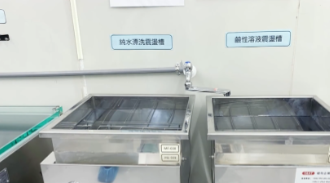
01Ultrasonic oscillation cleaning
Ultrasonic cleaning is a core process in precision industries for removing micron-sized contaminants. It combines the dissolving effect of chemical cleaning agents with the high energy of physical vibrations to penetrate deep into complex pores and achieve a level of cleanliness that cannot be achieved by manual wiping.
 02
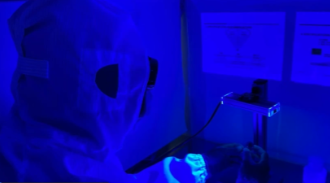
02UVA ultraviolet dust detection
An optical inspection technique that uses ultraviolet light of specific wavelengths to reveal minute contaminants. In industries with extremely high requirements for environmental cleanliness, such as semiconductors, optical lenses, panel manufacturing, and biopharmaceuticals, it is a crucial gatekeeper in ensuring "zero contamination" on product surfaces.
 03
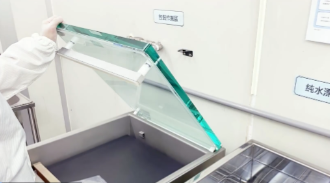
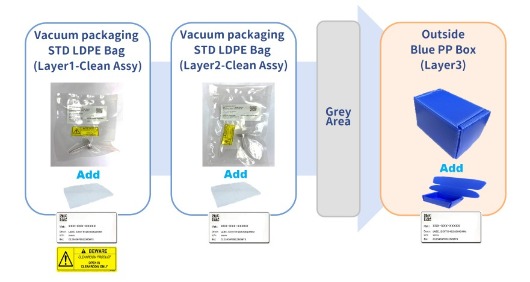
03Cleanroom vacuum packaging
The final core process before precision products leave the factory. Through vacuum extraction and sealing technology, the product is completely isolated from the external environment, maintaining the ultimate cleanliness achieved after dust-free cleaning.
CLEANROOM STANDARD
Class 1000 (ISO 6) Cleanroom
Dust-free cleaning| Vacuum packaging
A Class 1000 (ISO 6) cleanroom is a highly controlled industrial environment defined as having fewer than 1,000 dust particles with a diameter of 0.5 μm or larger per cubic foot of air. These environments are widely used in semiconductor packaging and testing, precision optical component assembly, and the manufacturing of high-end electronic components.
Maximum allowable size of dust particles ≥ 0.5 μm
The image on the right is a schematic diagram of a clean environment; it does not represent real-time measured data.